
Solida-1: Bayer sets new standards in tablet production
How digitalization, automation and sustainable filtration solutions are shaping the future of pharmaceutical production
A model for the future of pharmaceutical production
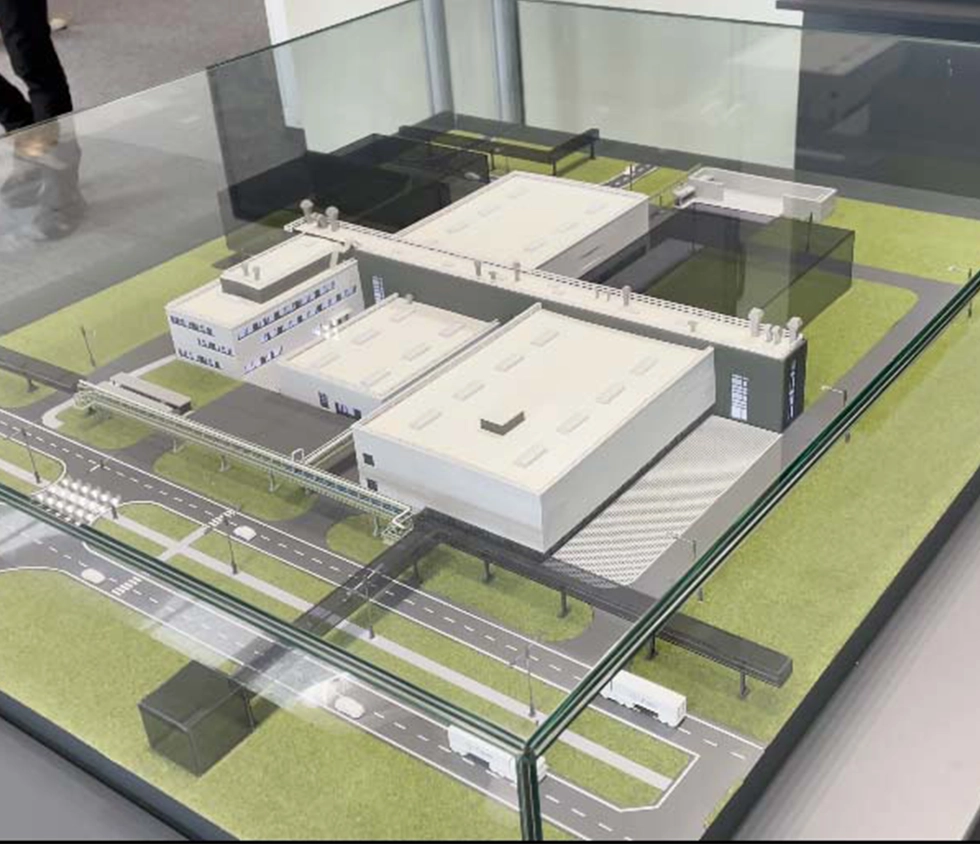
A cold fall morning at Chempark Leverkusen. The first rays of sunshine are reflected on the glass façade of Solida-1, Bayer’s newest and most modern tablet factory. Inside the 15,000 square meter plant, absolute precision prevails. State-of-the-art machines are arranged in a well-thought-out layout, networked by an intelligent automation system. The production lines, in which processes take place almost silently, can be seen through large clean room windows. Robotic arms move synchronously, while digital sensors register every tiny deviation and correct them in real time. It is a production system that monitors and optimizes itself – a factory that not only produces, but also learns.
Behind the gray façade lies a well thought-out structure: the plant is not designed as a static facility, but as a modular system that can be flexibly expanded. A central component of this concept is the so-called spine, the backbone of production. This central media and material supply channel runs through the entire plant and connects the various production modules with each other. Additional modules can be connected to this spine at any time without interrupting ongoing operations. Production thus remains highly adaptable – a crucial prerequisite for bringing new medicines into production more quickly.
Technology & equipment at a glance
Modular architecture
Thanks to the central spine module, production and medium modules can be connected or converted separately at any time.
AI-supported process monitoring
Ballroom cleanroom concept
From idea to reality: the development of Solida-1
The decision to build Solida-1 was made back in 2018, when Bayer realized that conventional production structures had reached their limits. Long throughput times, rigid production processes and high retooling costs made it difficult to manufacture new medicines efficiently. The solution was a completely new concept: a modular, digitally networked factory that continuously optimizes itself.
Construction began in 2021, and strict cleanroom quality requirements were in place from the outset. The first filtration systems were already running during construction to ensure that no particles or contaminants entered the sensitive production environment. Every machine component was installed under the highest safety precautions in order to meet the high GMP requirements.
Today, shortly before commissioning, the potential of this new production strategy is becoming apparent. Solida-1 is one of the first plants in the world to rely entirely on AI-supported process control and automated material flows. The ballroom concept, in which all production machines are housed in a single cleanroom, minimizes cross-contamination and maximizes production capacity.
Air and dust management as the key to cleanroom production
During the production of solid dosage forms, fine dust and particles are generated at several process stages – be it during granulation, tableting or coating of the tablets. In a highly automated plant like Solida-1, however, this cannot be left to chance. Controlled airflow is essential to avoid cross-contamination, ensure product quality and protect employees from potentially active ingredients.
The entire manufacturing process is designed to prevent particles from entering the environment in the first place. During tablet compression, the high mechanical load produces fine powder residues that must be extracted immediately before they spread throughout the cleanroom. The situation is similar with fluidized bed granulation, in which active ingredients in powder form are coated with binders to create a uniform granule structure. This creates aerosols that have to be separated in a targeted manner in order to ensure consistent quality.
The air flow in the coating process, in which tablets are coated with a protective film, is particularly demanding. In addition to fine dusts, this also produces paint mist and solvent residues, which must be reliably captured and filtered. Inefficient extraction would not only impair the quality of the coating, but also lead to deposits in the production environment.
To ensure that optimum cleanroom conditions prevail in the production rooms themselves, the necessary filter and exhaust air systems are located in separate technical rooms. Here, the extracted air flows are reliably cleaned before they are safely discharged or returned to the air circuit.
This spatial separation further reduces the particle load in the production area and ensures maximum operational safety. The Safe Change system, which enables contamination-free filter changes without affecting the cleanroom environment, is particularly important here.
A central element of this concept is the double HEPA filtration, which creates an additional layer of protection in critical processes. The systems used by HET Filter combine three key technologies in one system: containment, explosion protection and GMP-compliant design. This combination enables the safe capture of highly active dusts, protects the system in the event of a dust explosion and at the same time meets all hygienic requirements for materials, seals and cleanability. This integration minimizes interfaces, reduces risks and simplifies operating processes – a decisive contribution to the overall safety and regulatory compliance of the system.
This sophisticated air routing keeps the cleanroom environment stable, regardless of which active ingredients are being processed. At the same time, staff workload is reduced as manual cleaning processes can be reduced to a minimum. Solida-1 is therefore not only a pioneer in terms of efficiency, but also sets new standards for safety and quality in pharmaceutical production.
Would you like to know how our filter systems can make your processes safer and more efficient?
Get in touch with us
Automation and efficiency in pharmaceutical production
The technological basis of Solida-1 is the end-to-end digital networking of all production steps. Sensors monitor all process parameters in real time – from temperature and humidity to the exact dosage of active ingredients. Deviations are detected automatically and corrected immediately by the SIPAT process control system from Siemens.
Driverless transport systems move raw materials autonomously from one station to the next, so that the entire production flow takes place without manual intervention. This not only reduces the risk of human error, but also significantly reduces personnel costs. Despite the high production capacity, Solida-1 is operated with a comparatively small workforce – the intelligent automation takes over the routine tasks while the employees concentrate on process control and quality management.
Sustainability as a central element
In addition to efficiency and automation, sustainability also plays a key role in the overall concept of Solida-1. An innovative geothermal system supplies the facility with renewable energy and reduces CO₂ emissions by 70% compared to conventional pharmaceutical plants. The entire building technology is designed to precisely control heating and cooling and thus further minimize energy consumption.
The use of modern filtration solutions also ensures that material losses are reduced and filter changes can be carried out safely. With energy-efficient dust separation systems and durable filter media, HET Filter helps to further reduce the ecological footprint of production.
Solida-1 is more than just a factory – it is a scalable production model that could serve as a model for future pharmaceutical sites. Thanks to its modular architecture and spine concept, the plant can be adapted to new requirements at any time.
While the final preparations for the start of production are underway, it is already clear that Solida-1 is setting a new benchmark for the global pharmaceutical industry. The combination of intelligent automation, sustainable energy supply and precise dust management makes the plant a pioneer for the factories of tomorrow.
When the first tablets officially roll off the production line in 2026, we will see whether this ambitious concept works – but Solida-1 is already regarded as one of the most innovative projects in pharmaceutical manufacturing. The future of drug production begins here.
Other interesting topics
Focus on nitrosamines: containment and filter solutions for maximum pharmaceutical safety
Nitrosamines have been a key quality and safety issue in the pharmaceutical industry for several years. The discovery of nitrosamine-containing...
Retrofit containment solutions for existing systems: Optimize safety and compliance economically
Pharmaceutical and fine chemical companies must regularly adapt their production environments to new regulations.Stricter GMP requirements, the...
Digitalization in filtration technology
Digitalization has long since arrived in production-related areas of the pharmaceutical industry - with a clear goal: greater efficiency, safety and...


